Prism Health Lends Expertise for Expansion of Oregon’s Behavioral Health Workforce
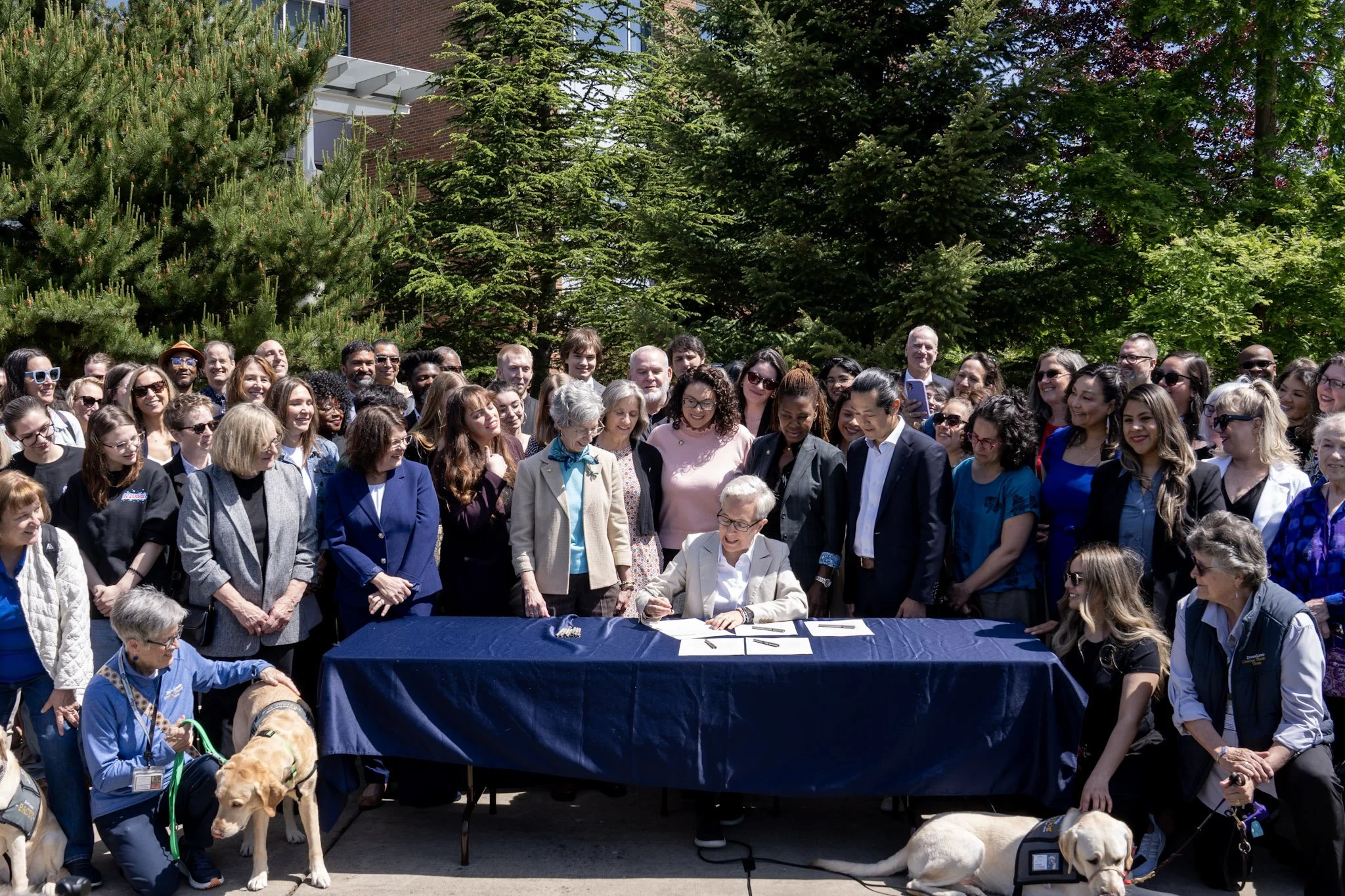
During a recent bill signing ceremony at the University of Oregon’s Ballmer Institute, Governor Tina Kotek signed bills aimed at strengthening Oregon’s behavioral health workforce and expanding access to mental health and addiction services. Prism Health was proud to lend our expertise and support to the landmark legislation that removes barriers to entering the profession, expands the workforce, improves workplace safety, and protects young people from negative mental health outcomes relating to emerging technologies such as artificial intelligence.
"Oregon’s behavioral health professionals are stretched thin, and Oregonians in crisis are waiting too long for care,” Governor Kotek said. “The new laws celebrated today address this challenge – four bills take action to support our workforce by cutting red tape, improving safety, and expanding pathways into the field, and one bill sets guardrails around emerging technologies that could harm our youth.”
“I’ve spent the past year gathering perspectives from providers across Oregon to hear how the behavioral health workforce crisis affects them and their clients,” First Lady Aimee Kotek Wilson said. “House Bill 4083, Cutting Red Tape for Behavioral Health Workers, is the first bill to come out of the Behavioral Health Talent Council’s work and reflects what workers told us they need to stay in the field and continue serving their communities.”
The signing ceremony included the following workforce-related legislation:
House Bill 4083 - Cutting Red Tape for Behavioral Health Workers: Streamlines Medicaid credentialing so qualified workers can start serving patients sooner, reduces administrative burden so providers can spend more time focused on clients, and expands access to clinical supervision so providers can get critical mentorship to succeed and stay in their careers.
House Bill 4069 - Requires behavioral health employers to develop and implement written safety policies and plans for the physical safety of behavioral health workers, especially those who experience safety risks and violence when working with high acuity populations.
House Bill 4115 - Streamlines the background check process for behavioral health workers, including extending checks from two to three years and making checks portable across care settings.
Senate Bill 1547 - Creates a credential for behavioral health professionals from the Ballmer Institute who are specially trained to work with adolescents – expanding the workforce and helping to fill a gap of early intervention and prevention.
The Governor also signed Senate Bill 1546 that requires AI chatbot operators to disclose artificial interactions and implement safeguards to protect users – especially minors – from self-harm or suicidal ideation.
The event featured remarks from Governor Kotek; First Lady Aimee Kotek Wilson; Shyra Merila-Simmons, Executive Director of Clatsop Behavioral Health; Liz O’Connor, Triager and AFSCME member; Representative Nancy Nathanson (D-Eugene); Janie Gullickson, Executive Director of The Peer Company; Senator Lisa Reynolds (D-Portland); and Dr. Kate McLaughlin, Executive Director of The Ballmer Institute. Video of the signing ceremony will be available on Governor Kotek’s YouTube page.
ADVOCACY CONTACT
Adie Steckel
Deputy Director, Strategic Partnerships & Advocacy
e: asteckel@capnw.org
About Cascade AIDS Project
Founded in 1983 and incorporated in 1985 as Cascade AIDS Project, CAP is the oldest and largest community-based provider of HIV services, housing, education and advocacy in Oregon and Southwest Washington. We work to advance equity and access through inclusive health and wellness services for LGBTQ+ people, people affected by HIV, and all those seeking compassionate care. From Prism Health, our primary care and behavioral health clinics, to Our House, our long-term residential care facility for those living with HIV, we are proud to provide comprehensive programs that meet the individual care needs of our community.